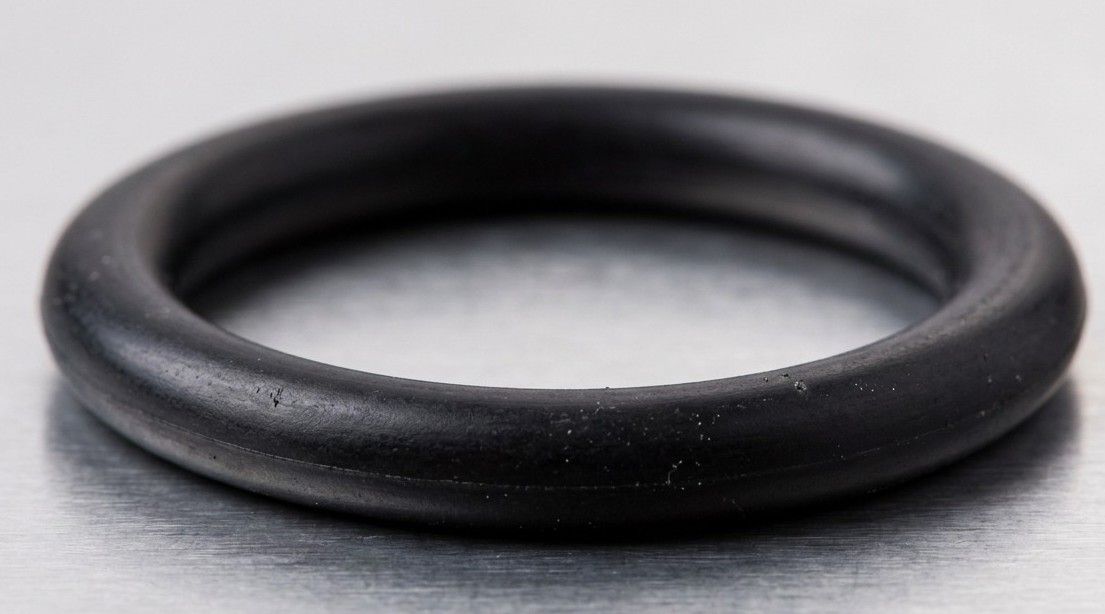
O-rings are widely used sealing components known for their simple design, reliability, and cost-effective performance. They help prevent leaks in hydraulic, pneumatic, automotive, and industrial equipment.
However, improper material selection, installation errors, and harsh operating conditions can cause premature failure. This guide covers the 8 most common causes of O-ring failures and how to prevent them.
Why Do O-Rings Fail?
An O-ring is designed to create a tight seal between two mating surfaces. During operation, it experiences pressure, temperature changes, chemical exposure, friction, and mechanical stress. If the sealing material or installation method is not suitable for the operating conditions, the O-ring will eventually degrade or fail.
Selecting the correct material and following proper installation procedures significantly reduces the likelihood of premature failure.
Common Causes of O-Ring Failures & How to Prevent Them
O-rings are engineered to provide reliable sealing under a wide range of operating conditions. However, exposure to excessive pressure, extreme temperatures, incompatible chemicals, improper installation, or continuous mechanical stress can cause them to fail prematurely. Identifying the specific failure mode is essential for selecting the right corrective action and preventing recurring seal failures.
Below are the eight most common causes of O-ring failures, along with their symptoms and proven prevention methods.
1. Compression Set
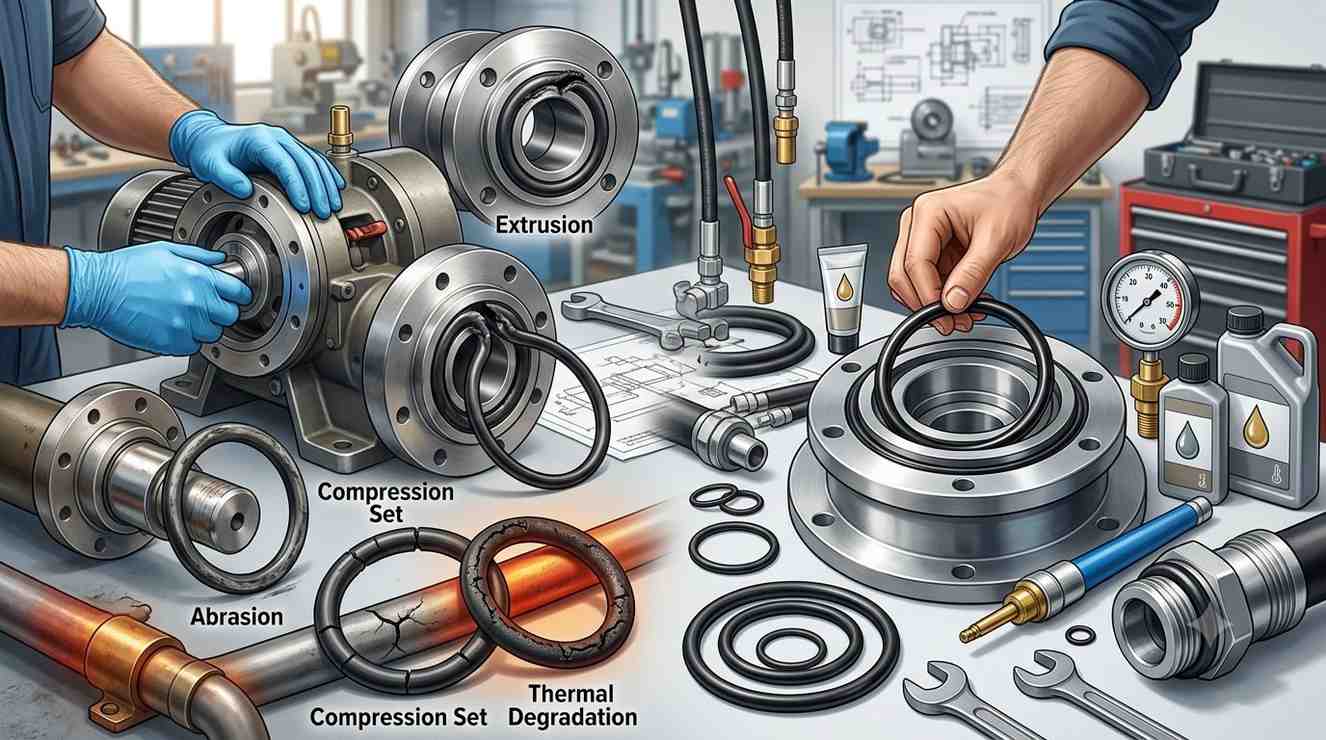
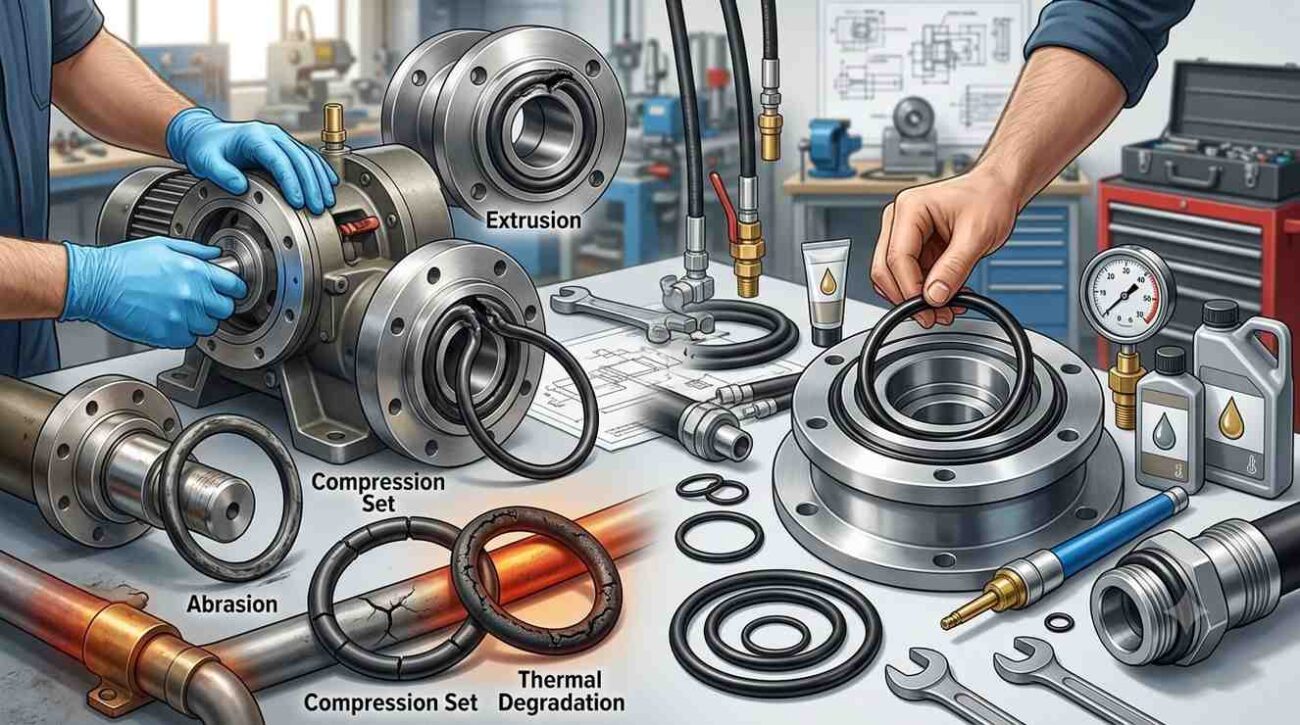
Compression set occurs when an O-ring remains compressed for an extended period and permanently loses its ability to return to its original shape. As the seal flattens, it can no longer maintain sufficient sealing pressure, resulting in fluid or gas leakage.
Common symptoms include:
- Permanently flattened cross-section
- Loss of elasticity
- Reduced sealing pressure
- Fluid or gas leaks
How to prevent it:
- Select elastomers with excellent compression set resistance.
- Maintain the correct gland depth and squeeze ratio.
- Avoid operating beyond the material’s maximum temperature rating.
- Replace aging O-rings during scheduled preventive maintenance.
Using high-quality materials specifically designed for long-term compression significantly extends seal life and maintains reliable sealing performance. When sourcing durable sealing solutions, choosing a trusted rubber O ring supplier UAE ensures you get the right material grade for your operating conditions, helping to prevent premature seal failure.
2. Extrusion & Nibbling
Extrusion occurs when high system pressure forces portions of the O-ring into the clearance gap between sealing surfaces. Repeated pressure cycles gradually tear away small pieces of rubber, a failure known as nibbling, which typically appears on the low-pressure side of the seal.
Common symptoms include:
- Torn or chipped edges
- Missing rubber fragments
- Nibbled appearance
- Progressive leakage
How to prevent it:
- Reduce clearance gaps wherever possible.
- Select a higher durometer (harder) O-ring material.
- Install backup rings for high-pressure applications.
- Ensure proper gland dimensions and operating pressure.
Proper groove design and the use of backup rings greatly improve sealing performance in high-pressure systems.
3. Heat Hardening & Thermal Degradation
Continuous exposure to temperatures beyond the elastomer’s operating range accelerates rubber aging. Over time, the material hardens, loses flexibility, and develops surface cracks, reducing its ability to maintain an effective seal.
Common symptoms include:
- Hard or brittle texture
- Sticky surface
- Fine surface cracks
- Reduced elasticity
How to prevent it:
- Choose an elastomer rated for both minimum and maximum operating temperatures.
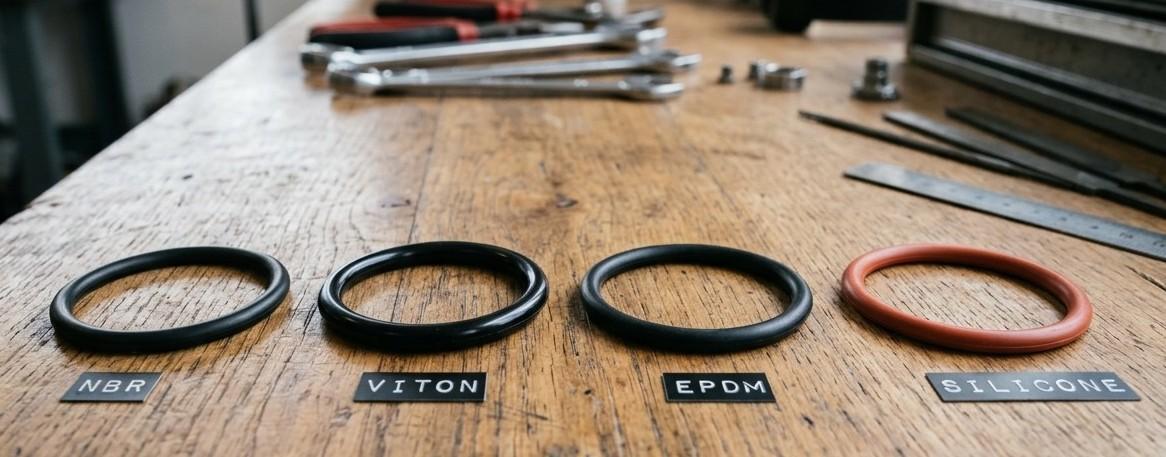
- Use high-temperature materials such as FKM (Viton®) or HNBR where required.
- Avoid prolonged exposure to severe thermal cycling.
- Monitor equipment temperatures regularly.
Selecting the correct material improves long-term sealing reliability. For custom applications, rubber o ring cord UAE provides a reliable solution for fabricating O-rings in the required size.
4. Chemical Attack
Chemical attack occurs when the O-ring material is incompatible with the fluids or gases it contacts. The chemical reaction gradually weakens the elastomer, leading to leakage and premature seal failure.
Common symptoms include:
- Swelling
- Shrinkage
- Hardening
- Soft or mushy texture
- Surface deterioration
How to prevent it:
- Verify chemical compatibility before installation.
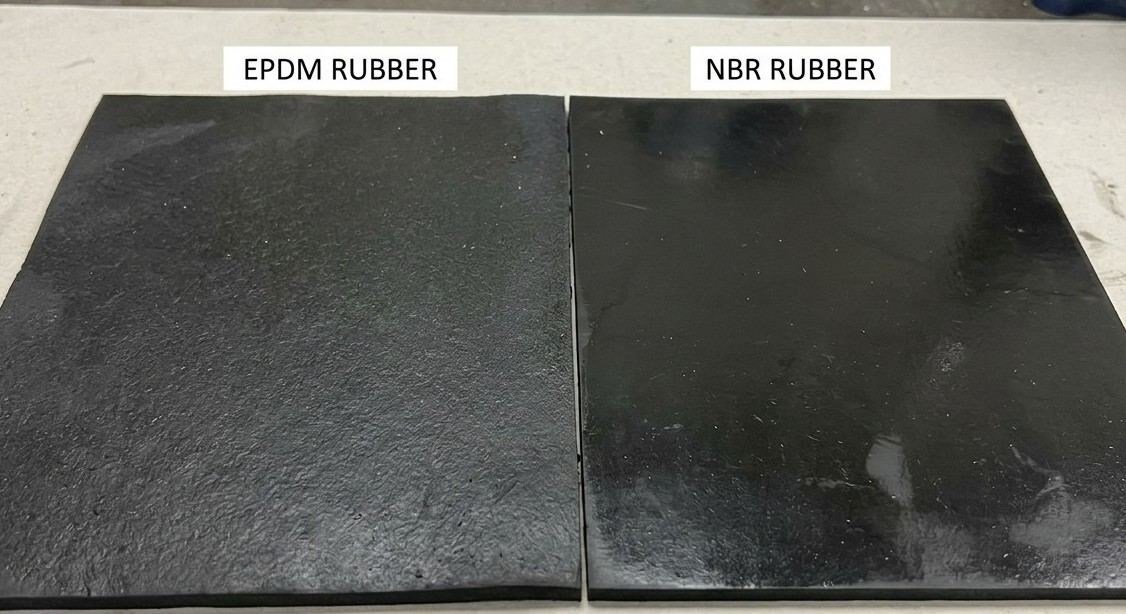
- Select materials designed for the specific media, such as FKM, FFKM, EPDM, or PTFE.
- Review compatibility charts for oils, fuels, solvents, acids, and cleaning agents.
- Replace seals immediately if chemical degradation is detected.
Matching the elastomer to the operating fluid is one of the most effective ways to maximize O-ring lifespan.
5. Installation Damage
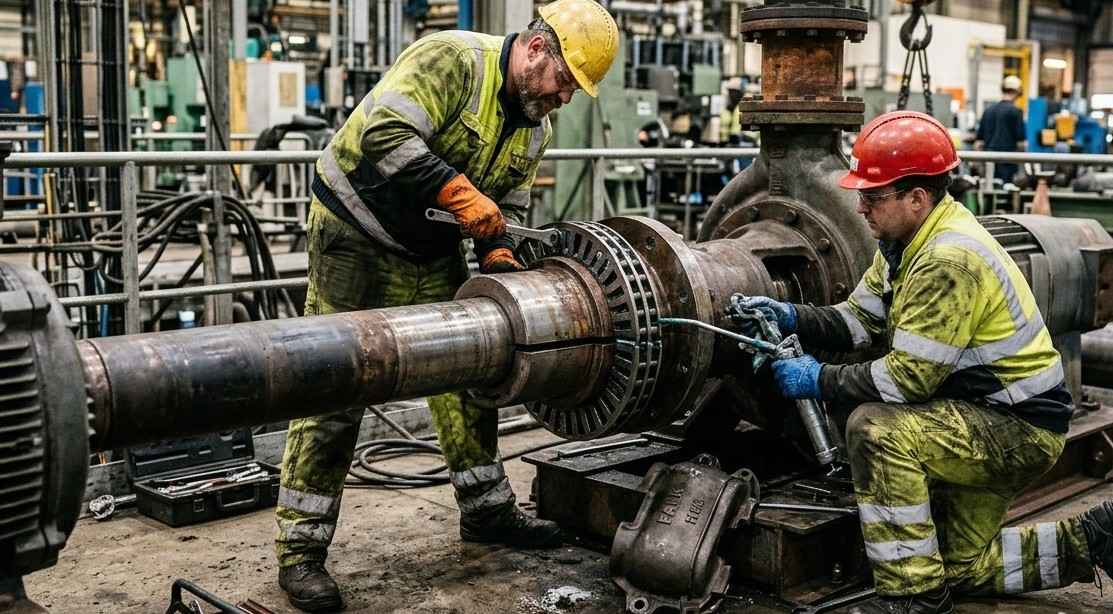
Improper installation can damage an O-ring before the equipment is even placed into service. Sharp edges, threaded components, excessive stretching, or insufficient lubrication can cut, tear, or distort the seal.
Common symptoms include:
- Tears
- Scratches
- Gouges
- Peeled or cut surfaces
- Immediate leakage after installation
How to prevent it:
- Remove or protect sharp edges and threads.
- Use compatible installation lubricants.
- Avoid twisting or overstretching the O-ring.
- Install seals using appropriate installation tools or sleeves.
Following proper installation procedures minimizes early failures and ensures the seal performs as intended.
6. Explosive Decompression
Explosive decompression primarily affects high-pressure gas applications. Gas molecules penetrate the elastomer under pressure, and when the pressure is released too quickly, the trapped gas expands rapidly, causing the O-ring to rupture internally.
Common symptoms include:
- Surface blisters
- Internal cracks
- Pitting
- Ruptured sealing surfaces
How to prevent it:
- Depressurize systems gradually.
- Use elastomers specifically designed for explosive decompression resistance.
- Select harder, gas-resistant compounds for high-pressure gas applications.
- Follow recommended pressure release procedures.
Using decompression-resistant sealing materials greatly reduces the risk of catastrophic seal failure in gas systems.
7. Abrasion & Wear
Dynamic applications expose O-rings to continuous movement, friction, and sliding contact. Excessive wear gradually removes material from the sealing surface until leakage occurs.
Common symptoms include:
- Worn or flattened surfaces
- Flaking rubber
- Surface thinning
- Visible wear marks
- Progressive leakage
How to prevent it:
- Apply compatible lubrication.
- Improve the surface finish of sealing components.
- Use abrasion-resistant materials such as polyurethane where appropriate.
- Ensure proper alignment of moving components.
Reducing friction and maintaining smooth sealing surfaces significantly increases O-ring service life in dynamic applications.
8. Swelling & Shrinkage
Swelling and shrinkage are common forms of material degradation caused by fluid absorption or loss of plasticizers. Swollen O-rings may extrude from the gland, while shrunken seals lose contact pressure and allow leaks to develop.
Common symptoms include:
- Oversized or swollen seal
- Loose-fitting O-ring
- Surface cracks
- Loss of sealing pressure
- Leakage
How to prevent it:
- Choose elastomers with low fluid absorption characteristics.
- Verify compatibility with all operating fluids.
- Limit prolonged exposure to aggressive solvents whenever possible.
- Replace degraded seals before leakage develops.
Selecting chemically compatible materials and controlling exposure to aggressive fluids helps preserve the O-ring’s original dimensions and sealing performance.
Warning Signs of O-Ring Failure
Identifying problems early can prevent major equipment failures.
Watch for these common warning signs:
- Fluid or gas leakage
- Visible cracks
- Surface hardening
- Swelling or deformation
- Flattened sealing profile
- Torn or chipped edges
- Loss of elasticity
- Pressure drops within the system
Routine inspections allow damaged O-rings to be replaced before they cause costly downtime.
Best Practices to Prevent O-Ring Failures
Preventing O-ring failure requires a combination of proper material selection, installation, and maintenance.
Follow these best practices:
- Select the correct elastomer for the operating environment.
- Verify chemical compatibility before installation.
- Use the proper O-ring size and groove dimensions.
- Lubricate seals with compatible lubricants.
- Avoid twisting or over-stretching during installation.
- Replace aging seals during preventive maintenance.
- Inspect sealing surfaces for scratches or damage.
- Store O-rings according to manufacturer recommendations.
- Use backup rings in high-pressure systems.
- Monitor operating temperatures and pressures regularly.
Implementing these preventive measures significantly reduces leakage, maintenance costs, and unexpected equipment failures.
Choosing High-Quality O-Rings Matters
Not all O-rings offer the same level of performance.
Premium-quality O-rings manufactured from certified elastomers provide better resistance to compression set, abrasion, chemicals, and temperature extremes. They also deliver longer service life and more reliable sealing under demanding industrial conditions.
Whether your application involves hydraulic systems, pneumatic equipment, food processing, chemical plants, marine equipment, or automotive assemblies, selecting the correct O-ring material is essential for maximizing performance and minimizing maintenance costs.
Conclusion
Despite their small size, O-rings play a vital role in preventing leaks and ensuring reliable system performance. Most failures can be avoided through proper material selection, installation, and regular maintenance.
By understanding common failure causes and following preventive practices, businesses can reduce downtime and extend seal life. For high-quality O-rings designed to perform in demanding industrial environments, Al Omran Rubber Trading offers a comprehensive range of sealing solutions tailored to diverse applications across the UAE, GCC, and beyond.
Looking for a trusted O-ring supplier UAE? Contact Al Omran Rubber Trading today for expert guidance and premium-quality O-rings tailored to your industrial sealing requirements.
Explore Our O-Rings & Rubber Sealing Solutions