Choose rubber end caps by matching four factors: material, size, hardness, and operating environment. Select EPDM for outdoor and water exposure, nitrile for oils and fuels, and silicone for temperature extremes. Measure the exact outer or inner dimension, then confirm Shore A hardness and retention fit before ordering.
A cap that fits poorly fails quietly. It slips off in transit, cracks under UV light, or swells after contact with oil. The wrong specification leads to rework, warranty claims, and safety exposure. This guide gives you a practical selection framework.
What Are Rubber End Caps and Where Are They Used?
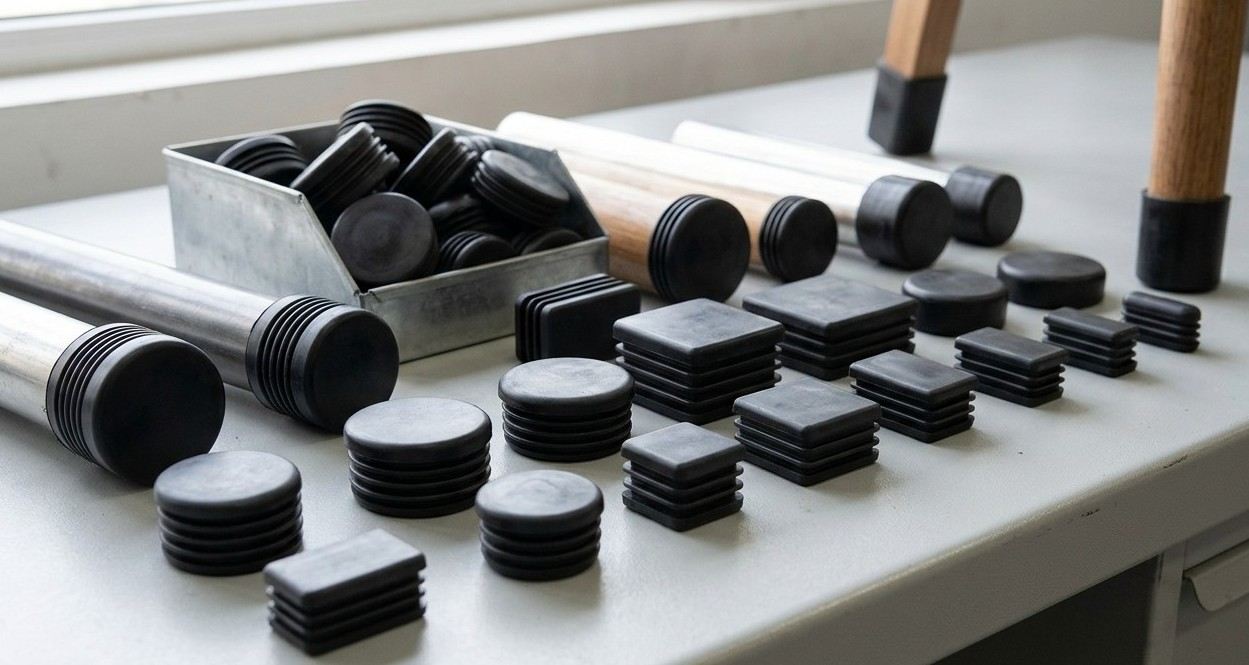
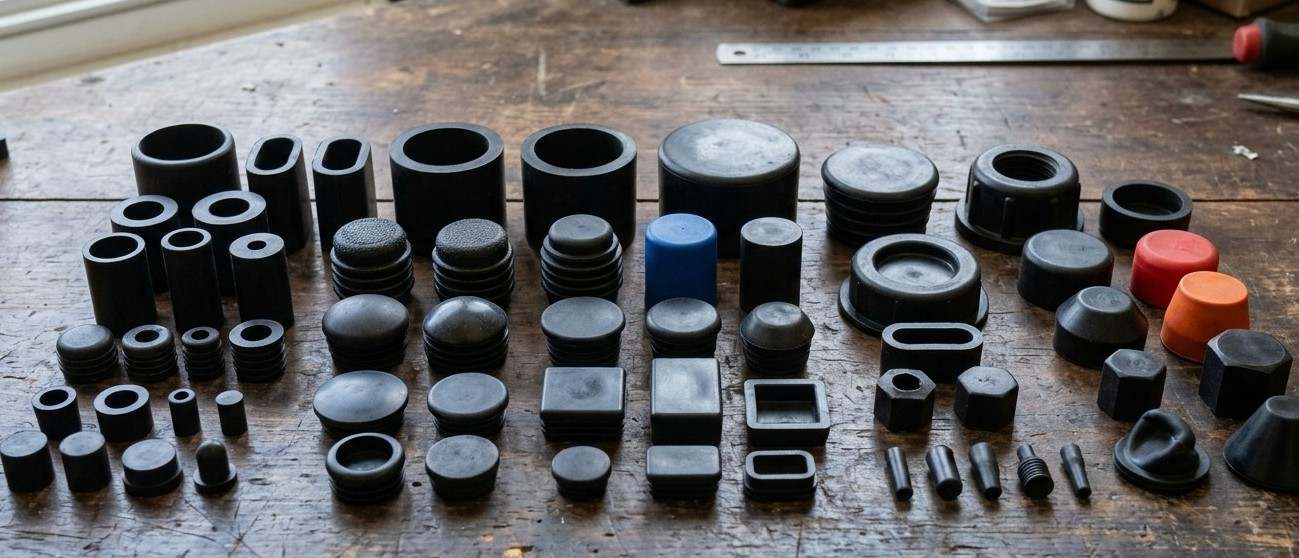
Rubber end caps are particularly versatile and useful components. Rubber end caps protect exposed screw threads, cover sharp metal or plastic tube edges, prevent floor scuffs from furniture, and seal pipes or rods against dust and moisture. They also guard people and equipment from impact damage during transport and daily use.
Common applications include scaffolding tubes, furniture legs, hydraulic fittings, threaded bolts, and cable protection. Each one places different demands on the cap. A furniture leg needs grip and floor protection, while an engine bay fitting needs heat and fluid resistance.
To compare available profiles and sizes for these uses, browse the PVC caps and rubber end caps category. Define the job first. It prevents both over-specifying and under-specifying the part.
Which Rubber Material Is Best for Your Environment?
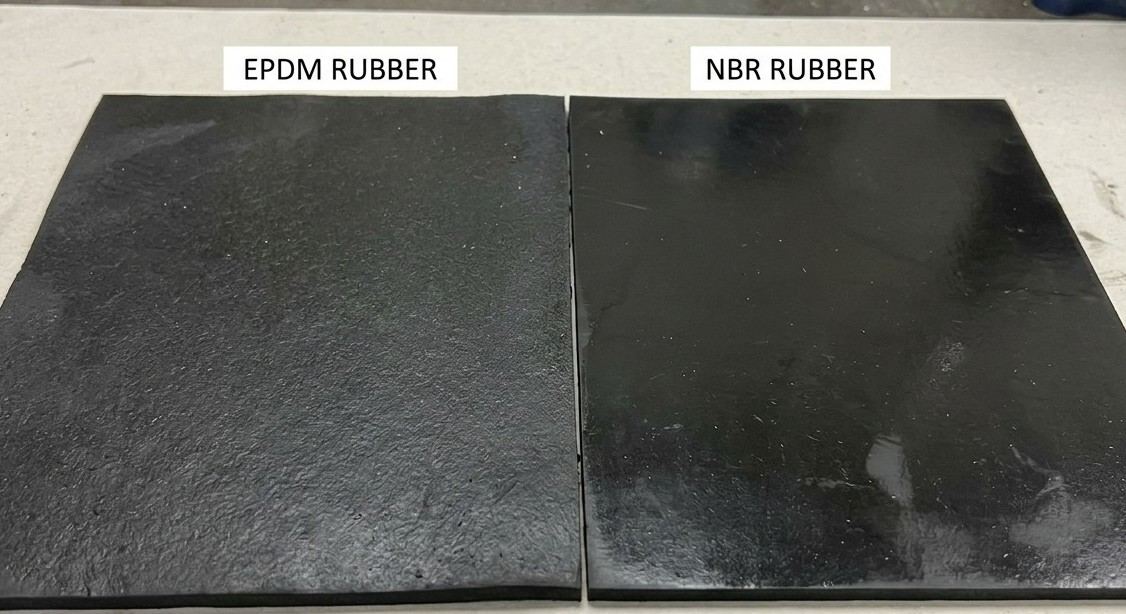
The best material depends on the harshest condition the cap will face, such as UV light, oil, heat, moisture, or aggressive chemicals. EPDM suits outdoor and water exposure, nitrile resists oils and fuels, and silicone tolerates extreme heat and cold. Select for the worst-case environment, not the average one.
Use these approximate guidelines as a starting point:
- EPDM: Strong against weather, ozone, and steam, from roughly -40 to 120 °C. Avoid contact with mineral oils.
- Nitrile (NBR): Resists oils, greases, and fuels, from roughly -30 to 100 °C. It ages faster in sunlight.
- Silicone: Handles about -55 to 200 °C. Its lower tear strength suits static applications.
- Neoprene: Offers balanced weather, flame, and moderate oil resistance.
- Natural rubber: Provides high elasticity at low cost for indoor use, but poor ozone resistance.
Reference ASTM D2000 for material classification and ISO 1817 for fluid-resistance testing. Ask for test data rather than accepting a general datasheet claim.
How Do You Get the Right Size and Fit?
Measure the exact surface the cap grips, using calipers rather than a tape measure, and record wall thickness as well. For plug-style caps, use the inside diameter. For cover-style caps, use the outside diameter, then add a slight interference fit so the cap stays put under vibration.
Tube shape matters. Square, rectangular, and oval profiles need cavity geometry matched to the corner radius, or the cap will gap at the corners. Weld seams, galvanized coatings, and paint can add a fraction of a millimeter to the real dimension.
Capture these measurements before requesting a quote:
- Inside diameter or inside width
- Outside diameter or outside width
- Wall thickness
- Corner radius for non-round profiles
- Required insertion depth
What Hardness and Design Features Matter Most?
Shore A hardness controls grip, cushioning, and installation effort. Softer caps in the 40 to 60 Shore A range seal and cushion well, while harder caps around 70 to 80 Shore A resist pushing out under load. Most applications perform best between 60 and 70.
Test hardness according to the ASTM D2240 durometer hardness standard so results stay comparable between batches and suppliers.
Design features also change performance:
- Ribbed or tapered plugs improve retention and ease insertion.
- Flanged heads cover the tube edge and prevent the cap from sinking inside.
- Vented caps let trapped air escape during pressure or temperature changes.
- Threaded caps protect bolts and fittings without adhesive.
- Custom colors help with size coding and brand identity.
How Do You Evaluate Rubber End Cap Suppliers Before Ordering?
Evaluate rubber end cap suppliers and their products with a structured five-point check covering environment, dimensions, load, compliance, and lifespan. Score each factor against worst-case conditions, then request samples for fit and exposure testing before committing to a full production order.
Use this checklist:
- Environment: Temperature range, UV exposure, and chemical contact.
- Dimensions: Measured tolerances, not nominal sizes.
- Load: Vibration, pulling force, and impact.
- Compliance: Food-contact, flame-retardant, or low-odor requirements.
- Lifespan: Expected service years and replacement access.
Good suppliers also provide material test data, offer tooling for custom profiles, and keep consistent batch quality. Share your drawings, operating temperature, and chemical exposure with a rubber engineering team and ask for a material recommendation before you order.
Avoid three frequent mistakes: choosing by price alone, skipping sample testing, and ignoring tolerance stack-up between the cap and the tube.
Final Thoughts: Choosing Rubber End Caps With Confidence
The right rubber end caps protect your product, your people, and your reputation. Match the material to the environment, measure the grip surface precisely, choose a hardness that balances seal and retention, and validate with samples.
Al Omran Rubber Trading manufactures custom rubber end caps built to your specifications.
Looking for rubber end cap suppliers you can rely on?
Share your application, operating environment, tube dimensions, and quantity, and our team will recommend the right rubber end cap material and hardness.
Talk to Our Rubber End Cap ExpertsFrequently Asked Questions
What is the most durable material for rubber end caps?
EPDM is the most durable choice for outdoor use because it resists UV, ozone, and water. For oil or fuel exposure, nitrile lasts longer. For extreme heat above 150 °C, silicone performs best. Durability always depends on the specific environment.
How tight should a rubber end cap fit?
A rubber end cap should fit snugly with a slight interference fit. It should stay in place under vibration and handling, yet install without excessive force. Too loose a fit allows slipping, while too tight a fit risks tearing during installation.
Can rubber end caps be made in custom sizes and colors?
Yes. Manufacturers can produce rubber end caps in custom dimensions, profiles, hardness levels, and colors. Provide the tube measurements, operating conditions, and quantity to receive an accurate specification and quote.
Related Reading: