Anti-vibration mounts for heavy machinery come in rubber, polyurethane, spring, air and wire rope types. Choosing the right one depends on four checks. Work out the load on each mounting point, match the running speed to the right static deflection, check the direction of the forces the machine produces, and choose a mount type built for that machine. Skipping any one of these is the most common reason a machine still shakes after new mounts are fitted.
Heavy machines never run quietly. Crushers, compressors, generators and presses push constant force into the floor, and that force travels into the building, the pipes and the machines nearby.
If you want to know how to select anti-vibration mounts for heavy industry, the main job is matching the mount to the machine. It is not about finding something that just fits the bolt holes. This guide explains the mount types, the simple calculations and the site checks that make the difference.
Why Does Vibration Control Matter on Heavy Machinery?
Vibration control matters because uncontrolled vibration loosens bolts, wears out bearings, cracks foundations and makes the whole plant noisy. A mount placed between the machine and its base soaks up that energy before it spreads to the floor and the building. This gives you longer machine life, a steadier structure and a safer workplace.
Picture a compressor bolted straight to a concrete slab. It runs fine for a few months. Then the bolts start working loose, a pipe flange begins to leak and the floor nearby starts to hum. By the time someone finds the cause, the repair costs far more than a proper set of mounts would have.
What Are the Different Types of Anti-Vibration Mounts?
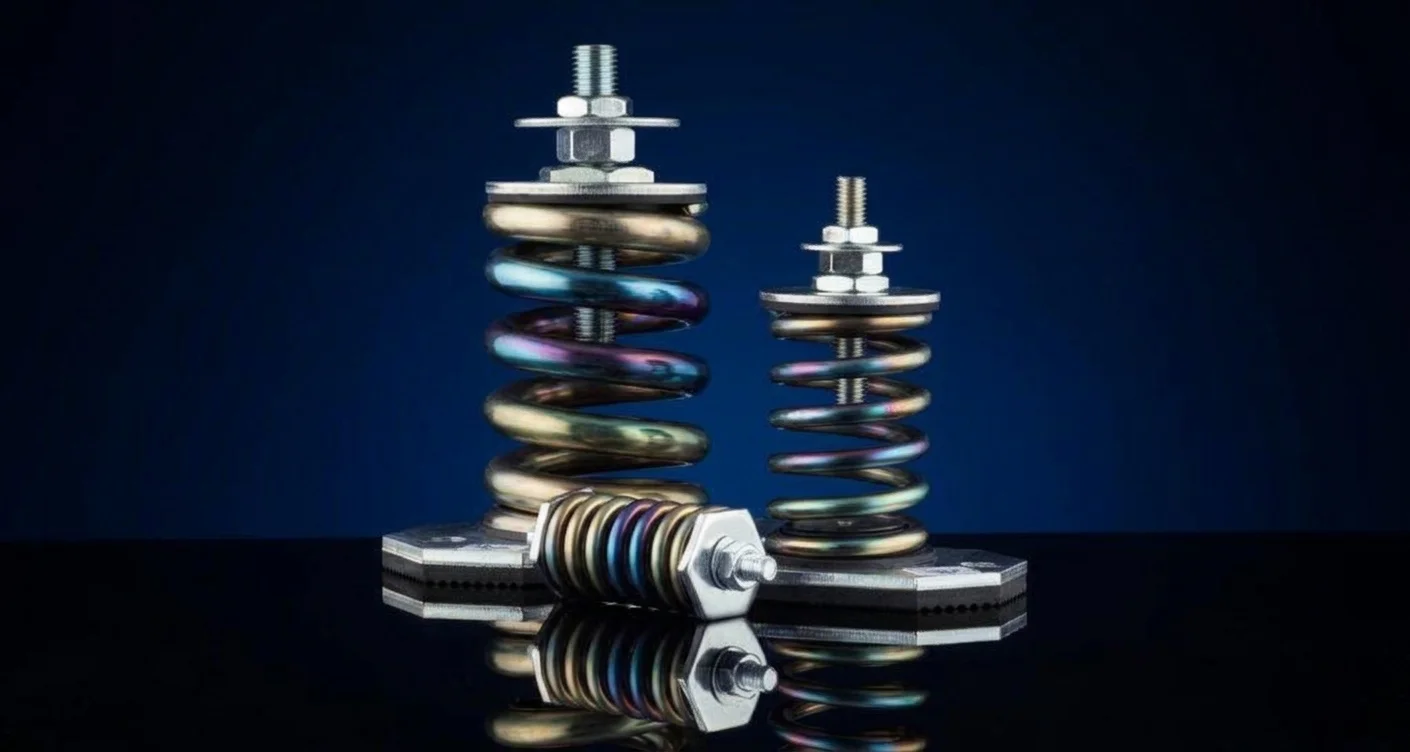
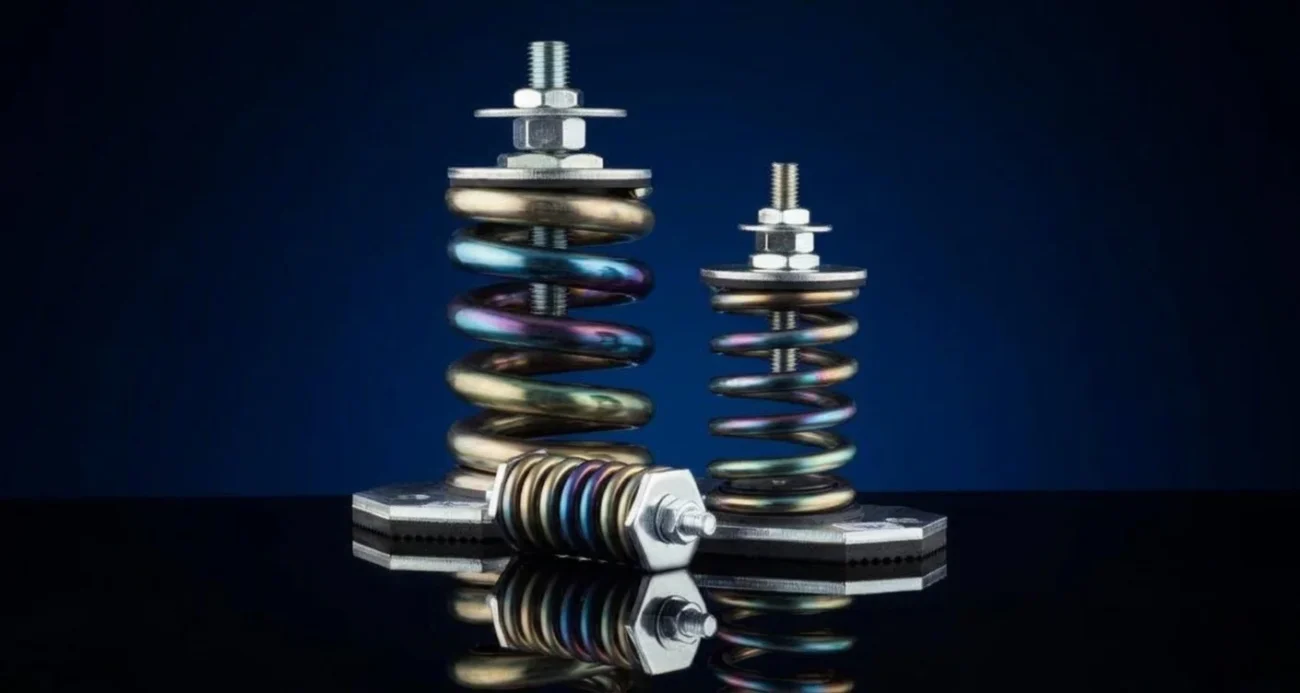
Anti-vibration mounts come in five main types, which are rubber, polyurethane, spring, air and wire rope. Rubber works for most machines, polyurethane handles abrasion and heavy loads, springs isolate slow, low frequency vibration, air mounts keep a steady height and wire rope mounts cope with shock and harsh conditions.
Mount type
Works best for
Keep in mind
Rubber
Pumps, compressors, generators and general machinery
The rubber must suit oil, heat and weather
Polyurethane
Abrasive, dusty and high load areas
Stiffer, so less effective at low frequencies
Spring
Very heavy machines and low frequency vibration
Needs damping to control resonance
Air
Precision equipment that needs constant height
Needs an air supply and more upkeep
Wire rope
Shock, extreme temperatures and corrosive sites
Better for shock than fine isolation
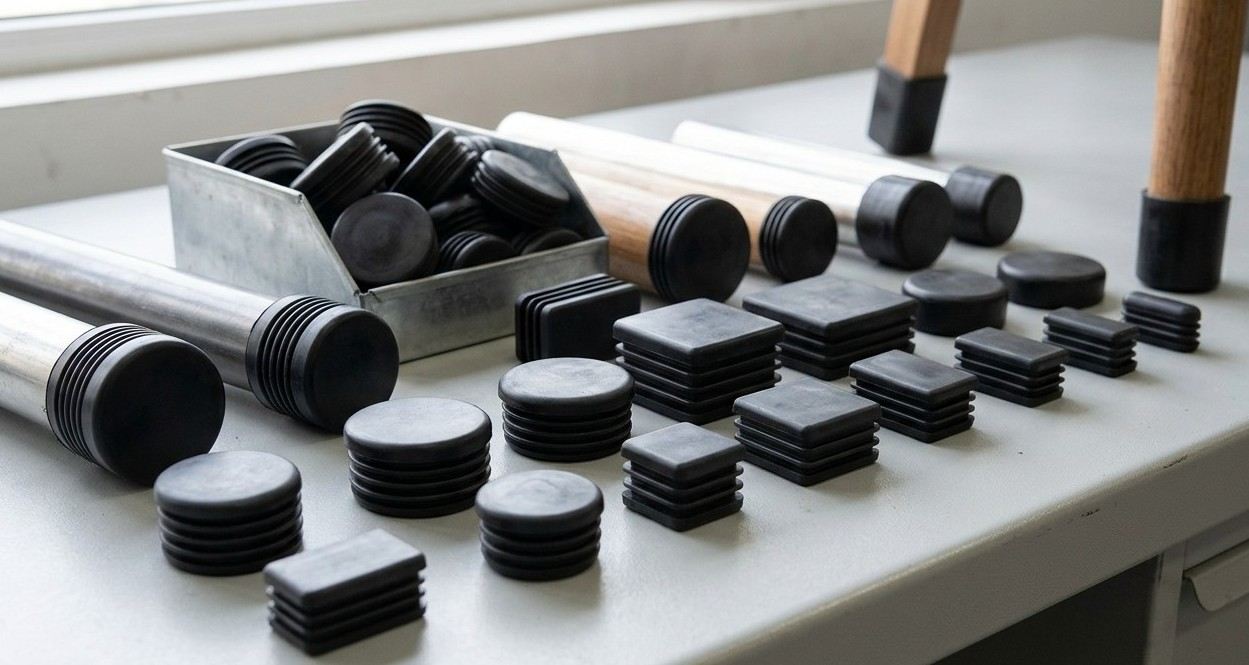
Rubber is the most common choice because it is compact, affordable and easy to tune through hardness and shape. A supplier with a full range of anti-vibration rubber mountings lets you compare PO sandwich mounts for general machinery, PAM mounts for generator sets and PC mounts for large compressors against your calculated load.
What Information Do You Need Before Choosing a Mount?
You need four things, which are the total machine weight, how that weight is shared across the mounting points, the running speed in RPM and the conditions around the machine. These four inputs drive every other decision, so measure them on site instead of relying only on the nameplate. Nameplates often leave out fluids, accessories and the base frame.
How Do You Calculate the Load on Each Mount?
Divide the total machine weight by the number of mounting points to get a starting load for each mount. Then adjust for uneven weight, because engines, motors and gearboxes rarely sit in the middle of a base and the heavy end carries more. Choose a mount rated above the highest figure, not the average.
For example, a 2,000 kg generator set on four mounts averages 500 kg per mount. If the engine end is heavier, one pair of mounts may carry 600 kg. Choosing for 500 kg would overload those mounts from day one.
Why Does Running Speed Matter?
Running speed decides the forcing frequency, which is how often the machine pushes on its mounts, and you get it in hertz by dividing RPM by 60. The natural frequency of the mount system should be one third of that figure or lower, otherwise the mount can make vibration worse instead of better.
A 1,500 RPM motor runs at 25 Hz. A mount system with a natural frequency of about 8 Hz or lower gives you a safe margin.
How Much Deflection Does a Heavy Machine Need?
Static deflection is how far a mount squashes down under the weight of the machine it carries. More deflection means better isolation, so slow machines need mounts with more deflection, while faster machines can work well with stiffer mounts, and presses and crushers also need a mount that limits movement under shock.
Too little deflection and the vibration passes straight through. Too much and the machine rocks, which puts strain on pipes and couplings. This is why knowing how to select anti-vibration mounts for heavy industry means balancing softness against stability, not just picking the softest option.
Why Does the Direction of Force Matter?
Direction matters because a mount that carries vertical load well may struggle with sideways or rocking forces. Running speed and weight together decide how much force the mount absorbs, and the position of the machine decides which way that force acts.
Mount variations help here. Standard mounts suit engines and generating sets, and they take up a little misalignment. High deflection mounts isolate the slow, heavy vibration that a stiffer mount lets straight through.
Fail safe mounts add a captive fixing that keeps the machine in place on its base. They are the better choice on vessels, raised structures or any machine that must not shift if the rubber fails.
What Mistakes Cause Mounts to Fail Early?
Most early failures come from sizing on weight alone, ignoring uneven load, leaving rigid connections on the machine or overlooking the site environment. Each mistake is easy to avoid with a short check before ordering, and most show up within the first few months of running.
Sizing on weight alone. Weight tells you the load, not the force or direction the machine produces.
Ignoring uneven weight. The heavy end of the base needs a higher rated mount.
Rigid pipes and exhausts. Fixed connections carry vibration around the mount, so use flexible joints.
Mixing mount types across one machine. This tilts the machine and overloads one corner.
Ignoring the environment. Oil, heat, salt water and sunlight all attack rubber, so the material and finish must suit the site.
What Should a Selection Checklist Include?
A reliable checklist covers load, speed, deflection and force direction in that order, and it should be finished on paper before anything is ordered. Confirm the final choice with your supplier by sharing the real weights and RPM of the machine. Following it is the practical answer to how to select anti-vibration mounts for heavy industry on a live project.
Measure the total weight and mark every mounting point.
Calculate the load per mount and allow for the heavier end.
Convert RPM to hertz and set a target natural frequency.
Pick the mount type and deflection that delivers it.
Check the direction of the forces and whether a high deflection or fail safe mount is needed.
Make pipes, ducts and exhausts flexible, then check alignment and level after fitting.
After installation, inspect the mounts every year, or sooner on dusty or oily sites. Look for cracks, hardening, bulging and permanent set. Replace worn mounts as a full set so the machine stays level.
Final Thoughts
Good vibration control comes down to numbers, not guesswork. Know which mount type suits your machine, the load on each mount, the forcing frequency and the direction of the forces, and the right choice becomes much easier.
Keep these checks in mind whenever you plan how to select anti-vibration mounts for heavy industry, and your machines will run steadier and last longer. If you want help matching a mount to your equipment, the team at Al Omran Rubber Trading can guide you through the options.
Get the right mount for your machine the first time
Whether your machine already shakes or you are planning a new installation, share its weight, running speed and site conditions with our team. We will help you match the right anti-vibration mount to your load, so you avoid repeat replacements and unplanned downtime.
How do you choose the right anti-vibration mount for a heavy machine?
Start with the load on each mounting point, then match the mount type, rubber hardness and deflection to the machine’s running speed. Finally, check the direction of the forces and the site conditions. This is the core of how to select anti-vibration mounts for heavy industry without guesswork.
How often should anti-vibration mounts be replaced?
There is no fixed interval because load, heat, oil and sunlight all affect rubber life. Inspect mounts at least once a year, and replace them as soon as you see cracking, hardening, bulging or permanent sag. On harsh sites, check more often.
Can one type of mount be used on every machine?
No. Machines differ in weight, speed and the direction of the forces they create, and sites differ in temperature and chemicals. A mount that works under a light pump will be too stiff for a heavy generator, so each machine should be sized on its own figures.