When engineers, maintenance teams, and procurement buyers search for industrial rubber products, the real challenge is not availability, it is selecting the correct material grade and design for reliable performance. The focus must always be on matching application-specific requirements under real operating conditions.
Industrial environments in 2026 demand higher resistance to heat, vibration, pressure, and chemical exposure. A wrong selection can lead to failure, downtime, and repeated replacement costs, making proper guidance essential.
What Are Industrial Rubber Products?
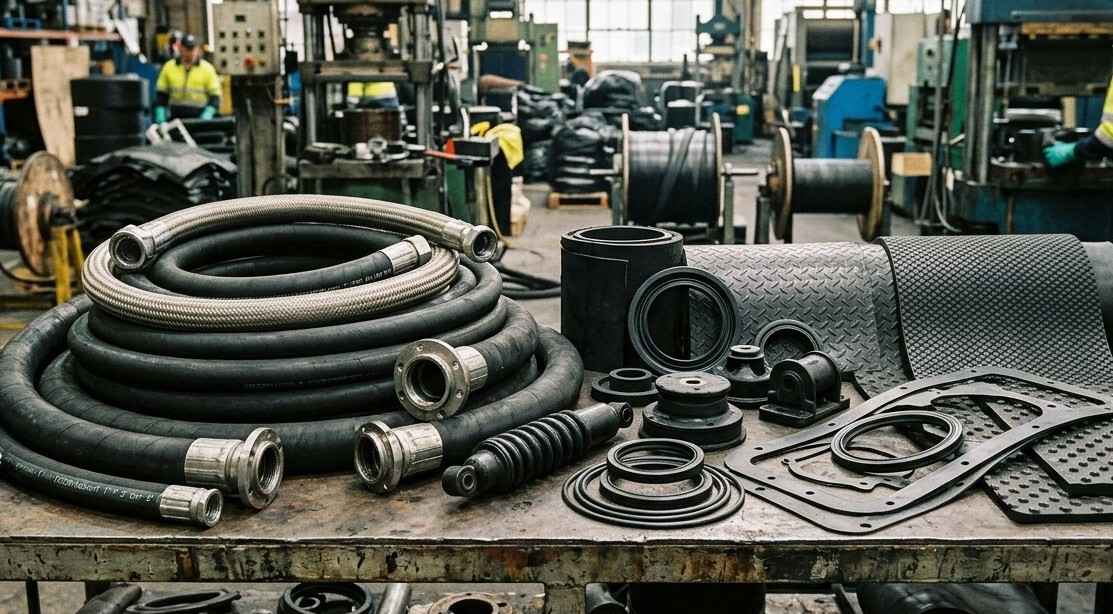
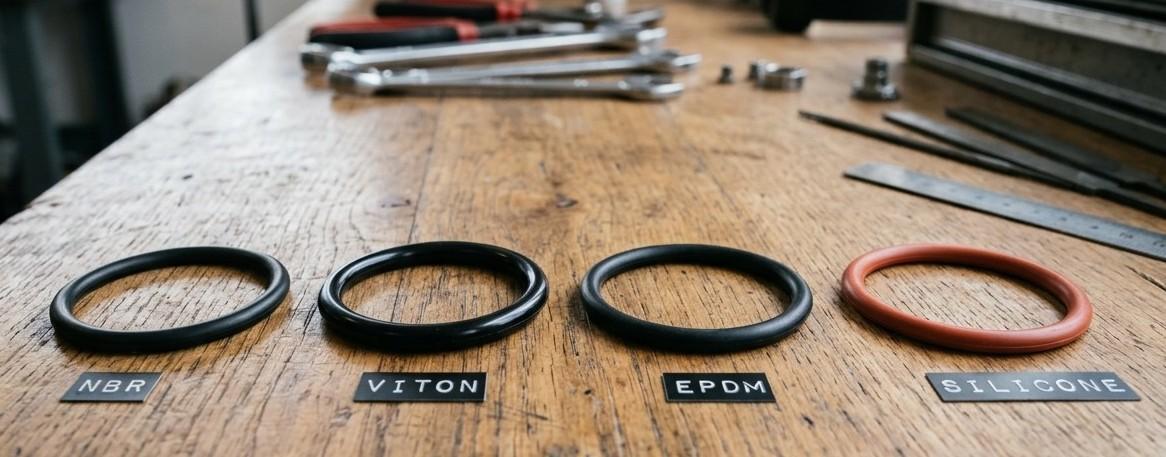
Industrial rubber products are engineered components manufactured from elastomeric compounds such as NBR, EPDM, Silicone, Viton (FKM), and Neoprene. These materials are designed to seal, connect, protect, isolate vibration, and improve the operational reliability of industrial systems.
They are used across almost every engineering sector including oil & gas, manufacturing, construction, marine, automotive, HVAC, and heavy machinery.
The Core Industrial Rubber Product Categories
Instead of treating rubber as a single material, industrial procurement relies on functional categories. Each category serves a different mechanical purpose.
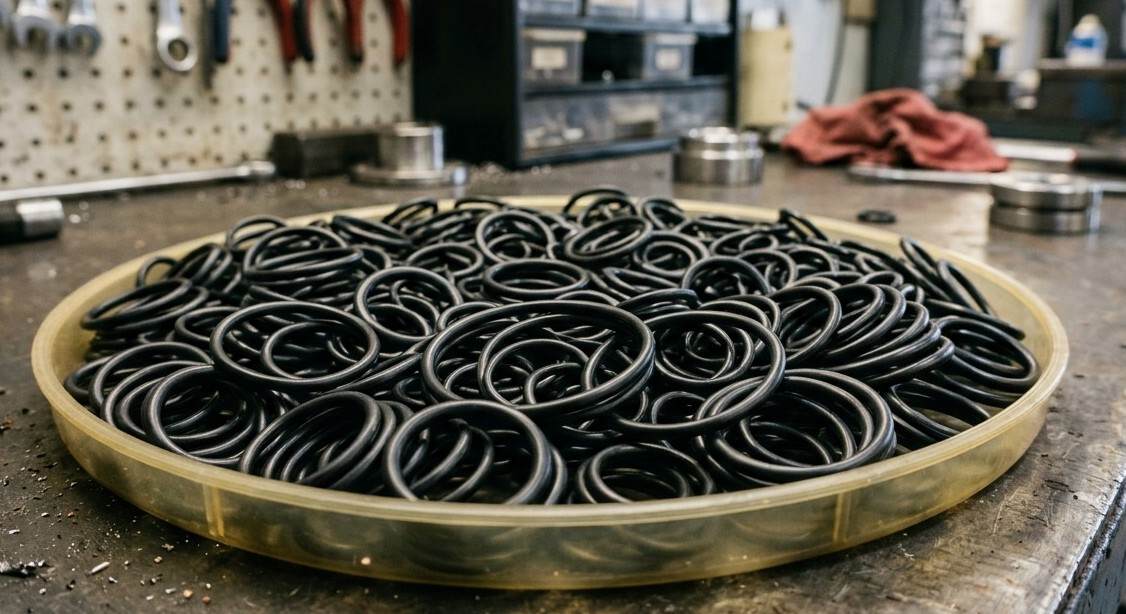
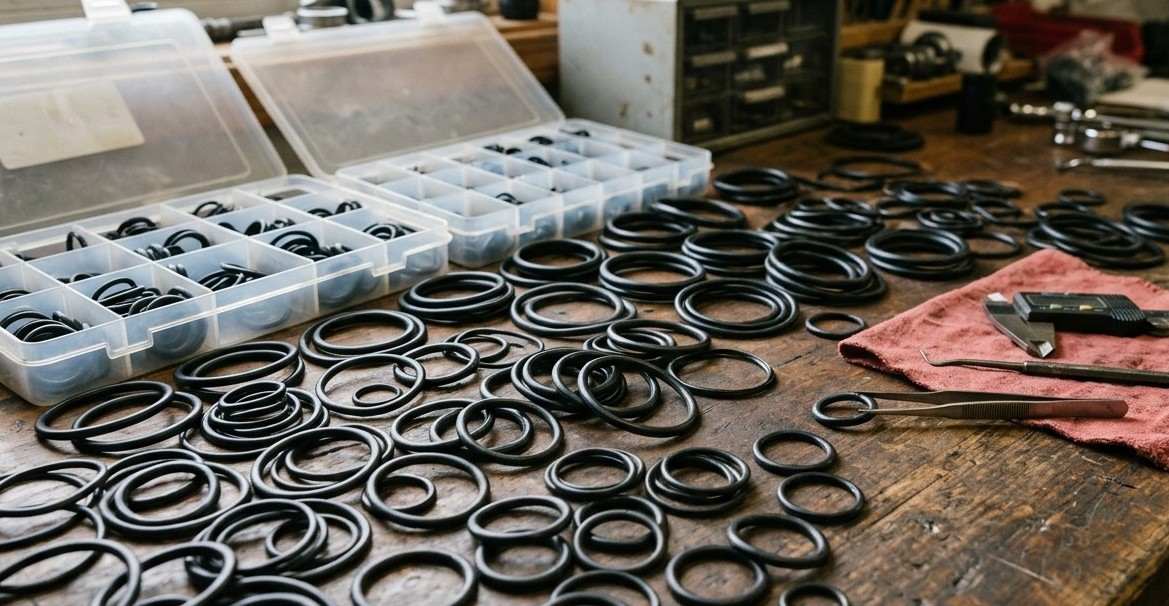
1. Rubber O-Rings
Rubber O-rings are circular sealing elements designed to prevent leakage between two mating surfaces under compression.
They are widely used in hydraulic systems, pneumatic assemblies, pumps, valves, compressors, and industrial pipelines.
Material Options
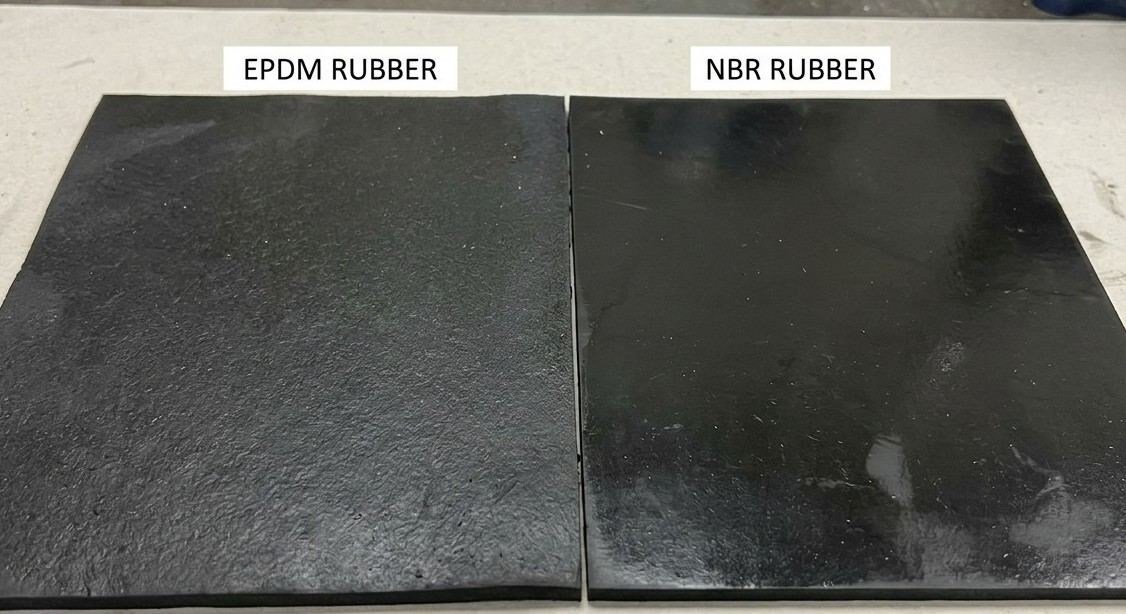
NBR – best for oil and petroleum-based systems
EPDM – ideal for steam, water, and outdoor exposure
Silicone O Ring– high temperature and food-grade applications
Neoprene – balanced resistance for moderate industrial use
Key Selection Factor
The most critical decision is material compatibility with the media being sealed. A mismatch leads to swelling, cracking, or rapid seal failure.
2. Rubber O-Ring Cords
O-ring cords are continuous rubber profiles supplied in roll form and cut to custom lengths, then joined to form O-rings of any required diameter.
They are used when standard O-ring sizes are not suitable or when large-diameter sealing is required.
Typical Applications
Large industrial flanges
Tank covers and enclosures
Custom machinery sealing
Maintenance replacement sealing solutions
For large-scale sealing requirements where standard sizes are not suitable, many procurement teams rely on a trustedrubber o ring cord supplier UAE to ensure consistent quality and precise cord dimensions for critical industrial applications.
Technical Insight
Bond quality at the joint is critical—poor vulcanization or adhesive bonding leads to leakage under pressure conditions.
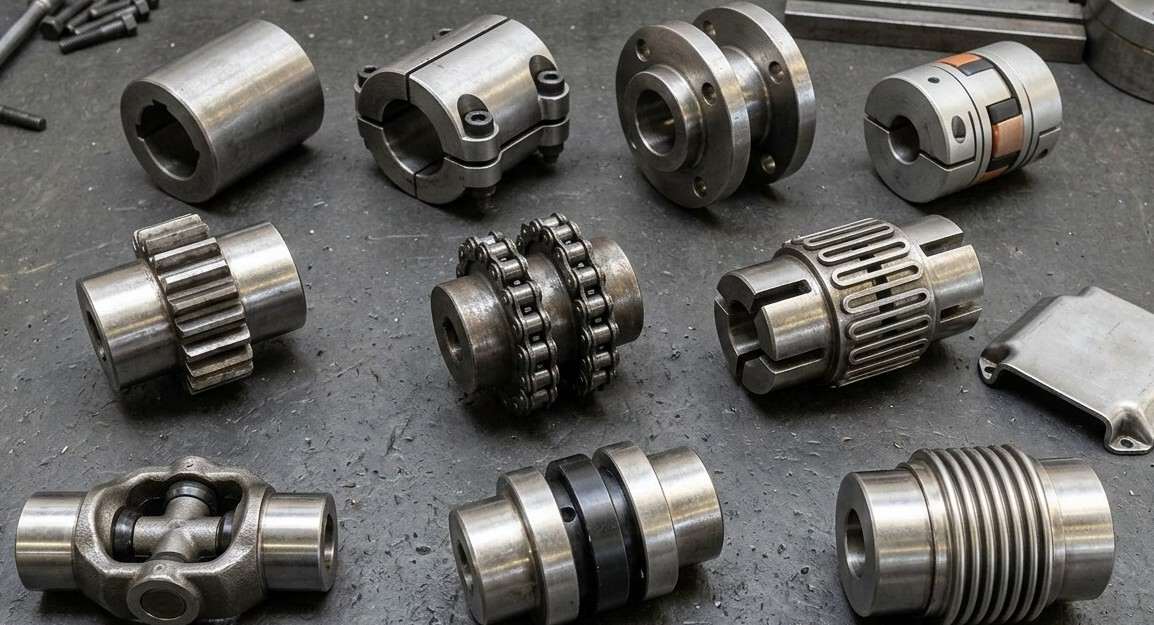
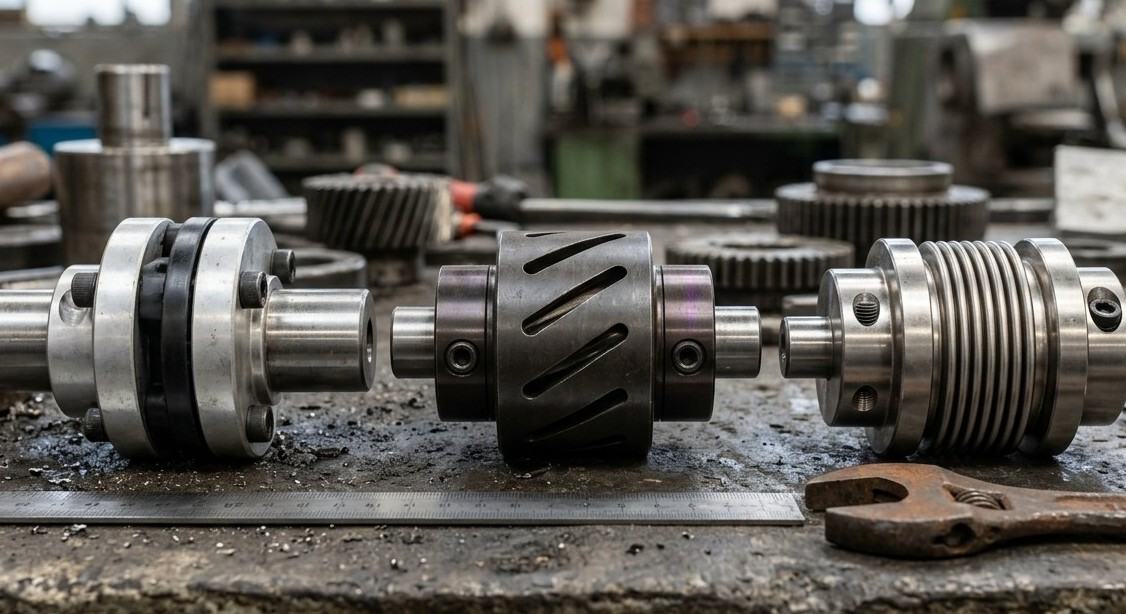
3. Coupling Elements
Coupling spider elements are flexible rubber components used inside mechanical couplings to transmit torque while absorbing vibration and misalignment.
They act as the “shock absorber” inside rotating equipment systems.
Applications
Pumps and compressors
Gearbox assemblies
Conveyor drives
Industrial motors
Key Performance Parameters
Torque capacity
Torsional stiffness
Heat resistance
Wear resistance under continuous rotation
Incorrect selection leads to premature cracking or coupling failure under load variation.
4. Complete Couplings
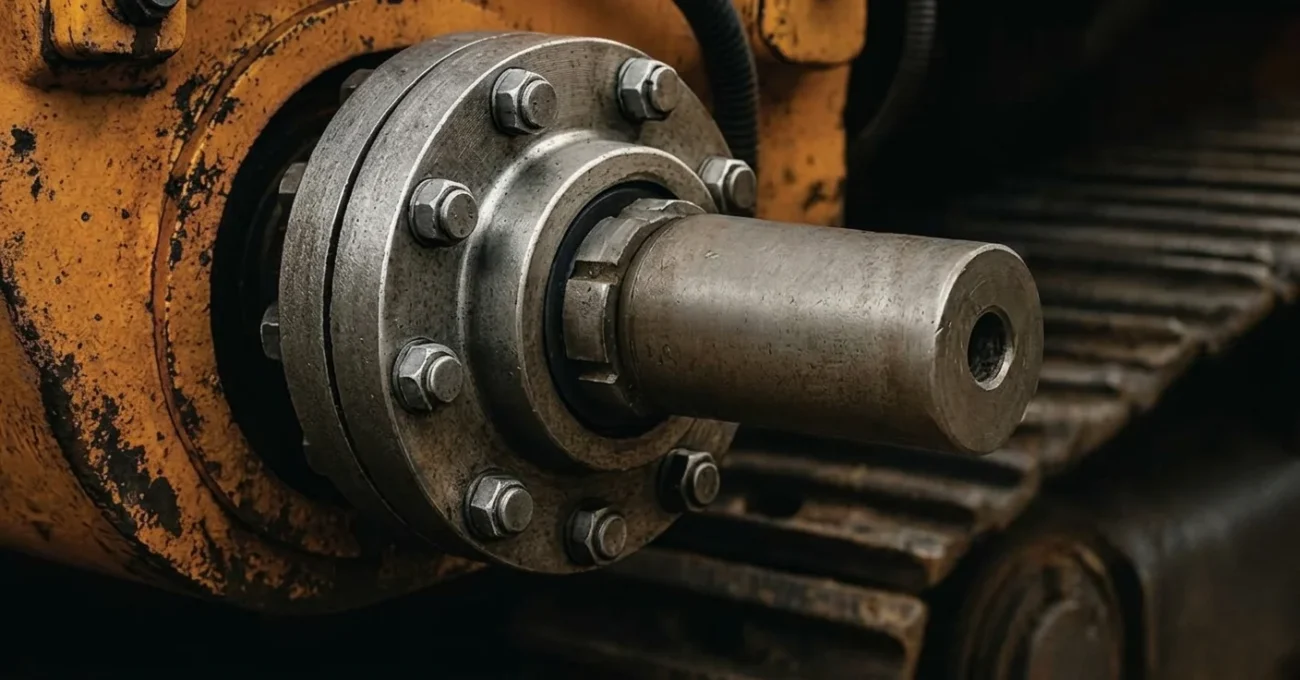
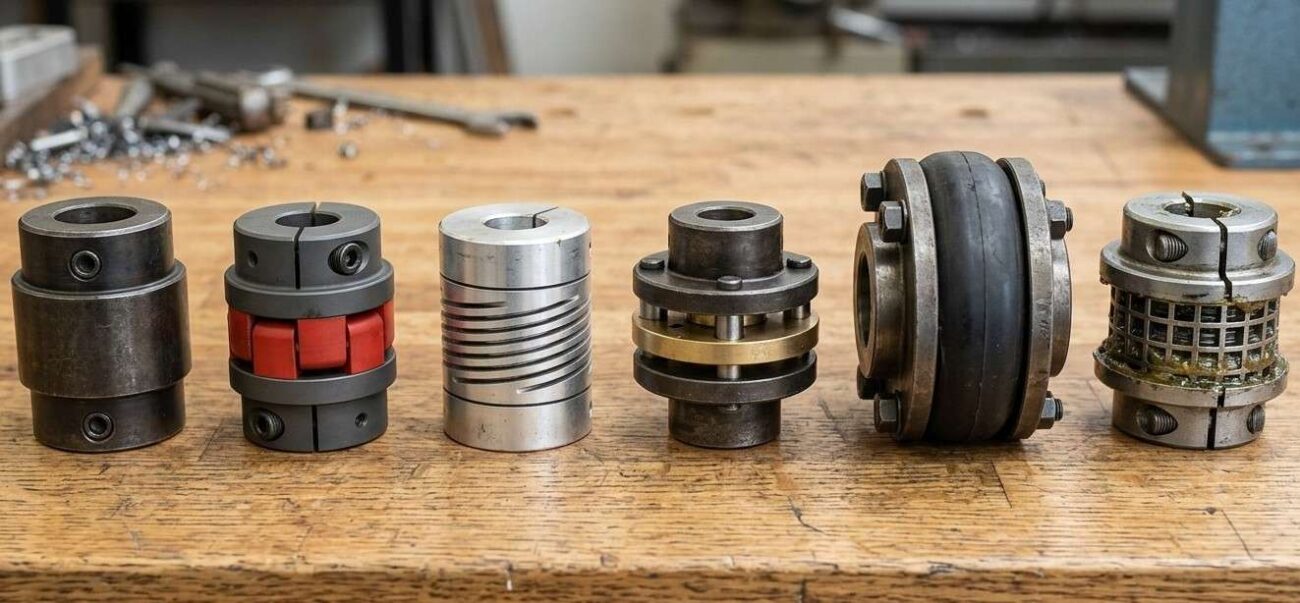
Complete couplings are fully assembled mechanical units designed for reliable power transmission between two shafts.
They integrate rubber elements with metal hubs to provide flexibility, alignment correction, and vibration damping.
Industrial Use Cases
Heavy-duty motors
Generator sets
Industrial drives
Marine propulsion systems
Why They Matter
Unlike basic coupling inserts, complete couplings are engineered systems where rubber and metal components must work in perfect alignment to avoid shaft damage and vibration overload.
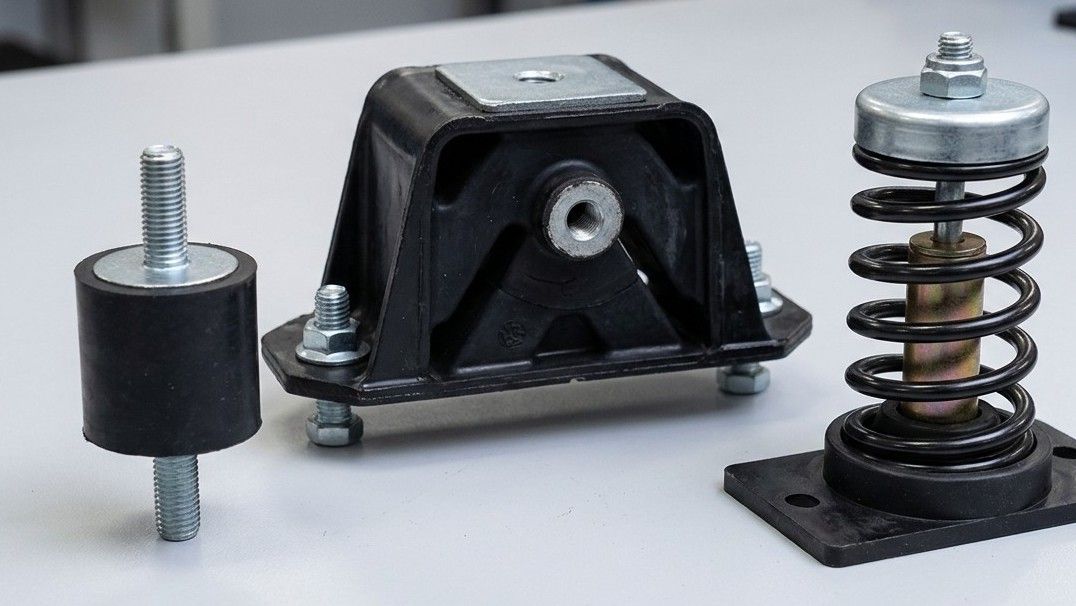
5. Vibration Mountings
Vibration mountings are engineered rubber-to-metal components designed to isolate machinery from structural vibration and absorb shock loads.
They are one of the most critical components in industrial maintenance systems.
Applications
Generators
Air compressors
Pumps
HVAC systems
Industrial machinery bases
For heavy machinery stability and long-term vibration control performance, sourcing from a reliablerubber vibration mounts uae provider ensures better load handling, reduced noise, and improved equipment lifespan in demanding environments.
Technical Function
They reduce vibration transfer, minimize noise, and prevent structural fatigue in both equipment and building foundations.
Selection Factors
Load capacity
Deflection rate
Rubber hardness (Shore A)
Dynamic vs static application
Incorrect hardness selection either causes excessive movement or poor vibration isolation.
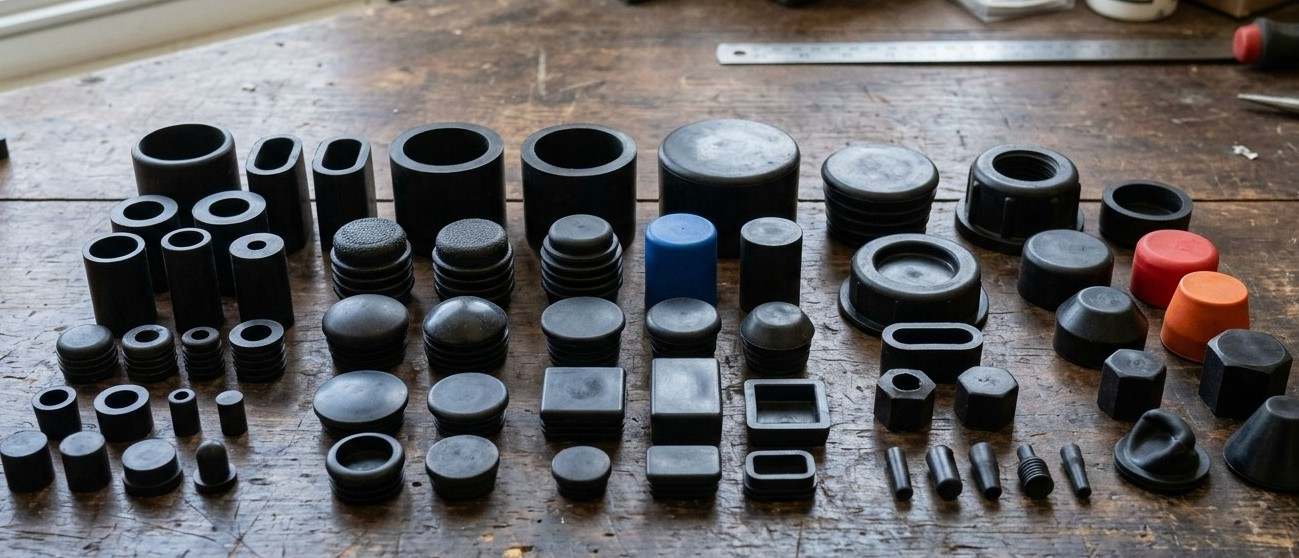
6. PVC Caps
PVC caps are protective components used to cover pipes, threads, bolts, and fittings during storage, transport, and installation.
Although simple in design, they play a critical role in preventing contamination and physical damage. To prevent damage, contamination, and thread wear during storage and transport, many industries prefer sourcing from specializedpvc caps suppliers uae offering durable protective solutions for industrial packaging needs.
Applications
Pipe protection in transit
Thread protection in hydraulic fittings
Dust prevention in industrial storage
Manufacturing and export packaging
Key Advantage
Low-cost but highly effective protection against dust, moisture, and mechanical damage before installation.
7. Rubber Packings
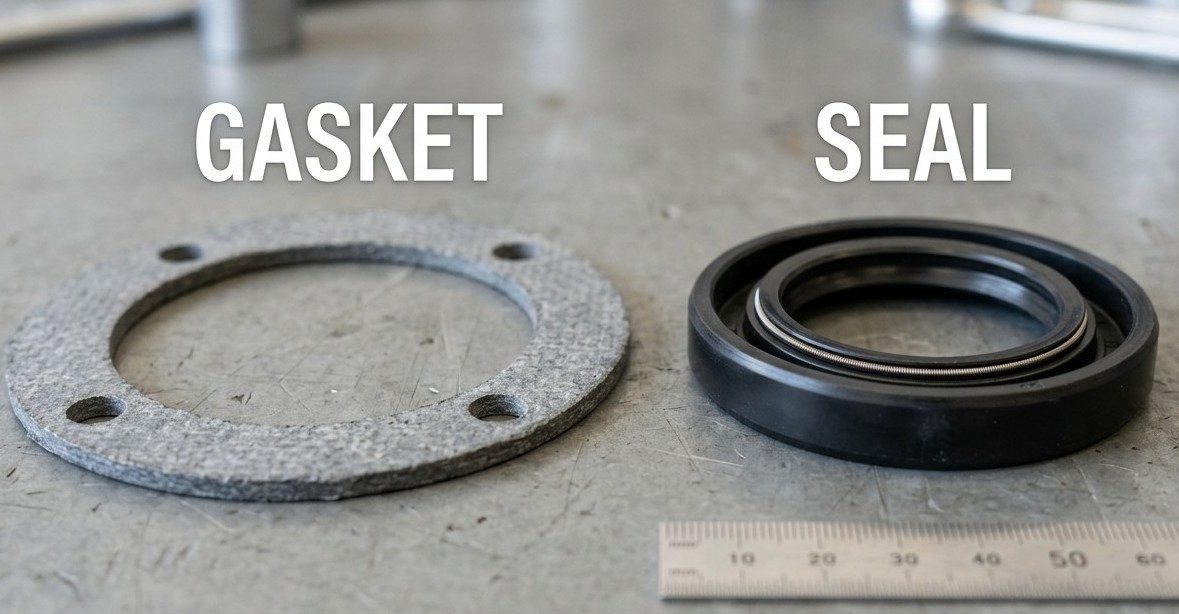
Rubber packings are sealing and cushioning components used in pumps, valves, hydraulic systems, and industrial machinery.
They are often custom-shaped and used in high-pressure sealing environments.
Applications
Pump housings
Valve assemblies
Hydraulic cylinders
Industrial equipment sealing systems
Material Selection
NBR for oil-based systems
EPDM for water and steam
Viton for chemical exposure
Neoprene for mixed industrial environments
Engineering Note
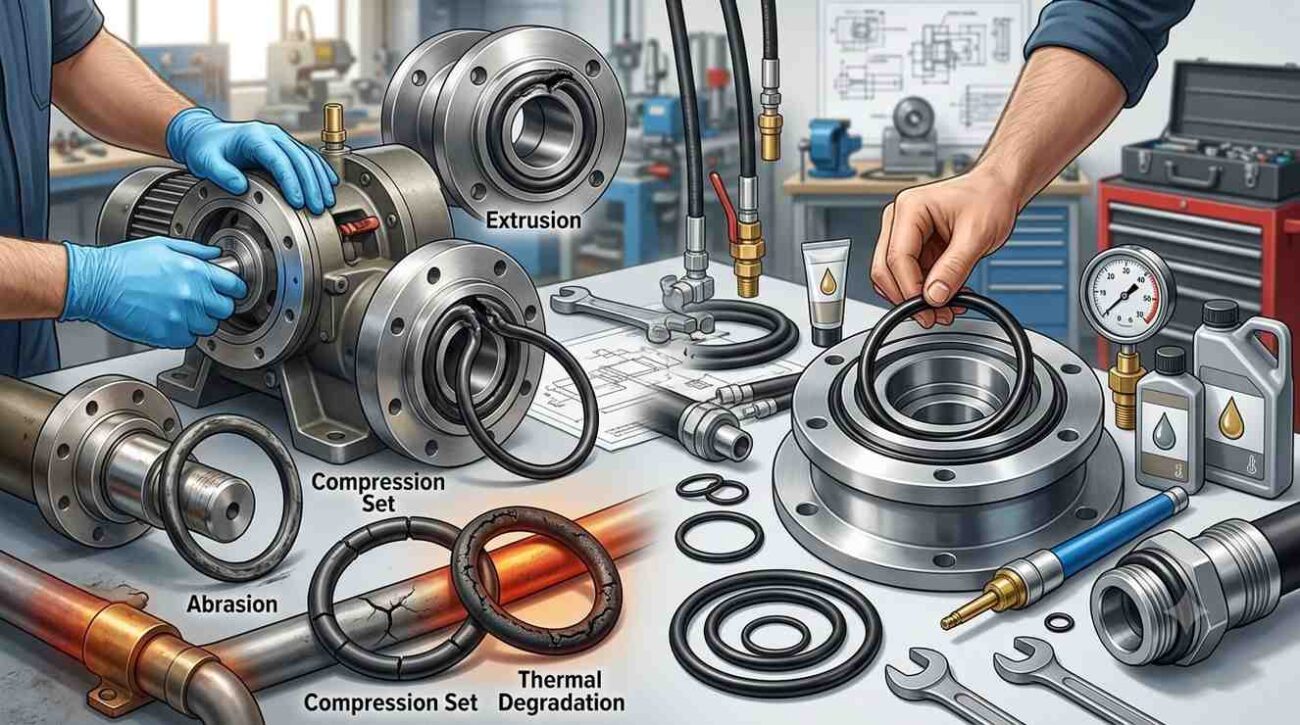
Compression set resistance is critical—poor-grade packing loses elasticity under continuous pressure and leads to leakage.
Rubber Grades: Selection Guide and Application Suitability
This is where most procurement errors occur. The term “rubber” alone is not sufficient in any industrial specification. The performance of a component is entirely determined by its grade, which defines chemical compatibility, temperature resistance, mechanical strength, and overall service life.
Selecting the wrong material grade can lead to swelling, cracking, hardening, or premature failure—even if the dimensions are correct.
Rubber Grade Selection Chart
Grade
Full Name
Key Strength
Avoid When
NBR
Nitrile Butadiene Rubber
Excellent oil and fuel resistance
Ozone, weathering, aromatic solvents
EPDM
Ethylene Propylene Diene Monomer
Weather, steam, hot water resistance
Petroleum oils and fuels
Silicone
Polydimethylsiloxane
Extreme temperature range (-60°C to 230°C), food-grade compatibility
Concentrated acids, fuels, high abrasion environments
Viton (FKM)
Fluoroelastomer
Superior chemical, fuel, and high-temperature resistance
Low-temperature flexibility requirements
Neoprene
Polychloroprene
Balanced resistance to oil and weather conditions
Strong oxidizing acids
Natural Rubber
Polyisoprene
High elasticity and excellent anti-vibration performance
Oils, fuels, ozone exposure
Rubber Hardness (Shore A) Selection by Application
Rubber hardness, measured in Shore A, is one of the most critical yet often overlooked specifications in industrial rubber selection. It directly affects sealing efficiency, vibration control, load-bearing capacity, and overall product performance.
Selecting the correct hardness ensures the component performs reliably under real operating conditions without deformation, leakage, or premature wear.
Typical Shore A Hardness by Application
Application
Typical Shore A Range
Anti-vibration mounts
40–60
O-rings and sealing elements
60–80
Conveyor skirting systems
50–75
Rubber gaskets
55–75
Grommets
50–70
Automotive bushes
50–70
Industrial Applications Across Sectors
1- Manufacturing Industry
Seals, couplings, mounts, and packings used in machinery systems.
2- Oil & Gas
High-performance seals, Viton O-rings, and chemical-resistant packings.
3- Construction
Vibration isolation, pipe protection, and sealing systems.
4- Marine Industry
Saltwater-resistant EPDM seals and anti-vibration mounts.
5- HVAC Systems
Vibration dampers, gaskets, and sealing solutions.
6- Automotive Sector
Couplings, bushings, seals, and vibration control systems.
Conclusion
Industrial rubber products are essential for ensuring efficiency, safety, and long-term reliability across modern industrial systems. Each component must be selected carefully based on material grade, hardness, and real operating conditions.
Proper material selection is now a critical requirement for engineers and procurement teams. Al Omran Rubber Trading is a trusted industrial rubber supplier in Dubai, providing high-quality industrial rubber products and engineered sealing solutions designed for demanding industrial applications.