If you work with machinery, you’ve probably heard the word “coupling” in maintenance meetings or product catalogs. But what exactly is a coupling? In simple terms, it’s a mechanical device that connects two shafts to transmit power between them.
Couplings might seem like a minor detail compared to motors or pumps. In reality, they quietly keep entire systems running without failure.
Understanding coupling types helps you choose the right part for your machinery. The right choice reduces downtime and extends equipment life. This guide breaks down everything you need to know in plain, practical language.
What Is Coupling?
A coupling is a mechanical element that joins two rotating shafts. In short, it’s a mechanical device that connects similar or dissimilar shafts in machines. It allows torque and rotational motion to pass from one shaft to another.
Couplings appear in pumps, motors, generators, compressors, and countless other rotating machines. Unlike gears or belts, couplings typically connect shafts that are aligned end-to-end rather than side-by-side. Beyond transmitting power, they also perform several other important jobs.
- Compensate for slight shaft misalignment
- Reduce shock loads and vibration
- Absorb torsional shock
- Protect equipment from overload
- Allow easy disconnection during maintenance
Without couplings, connecting two shafts would require perfect alignment. That’s nearly impossible to achieve in real-world industrial settings. This is why couplings remain a core part of mechanical design.
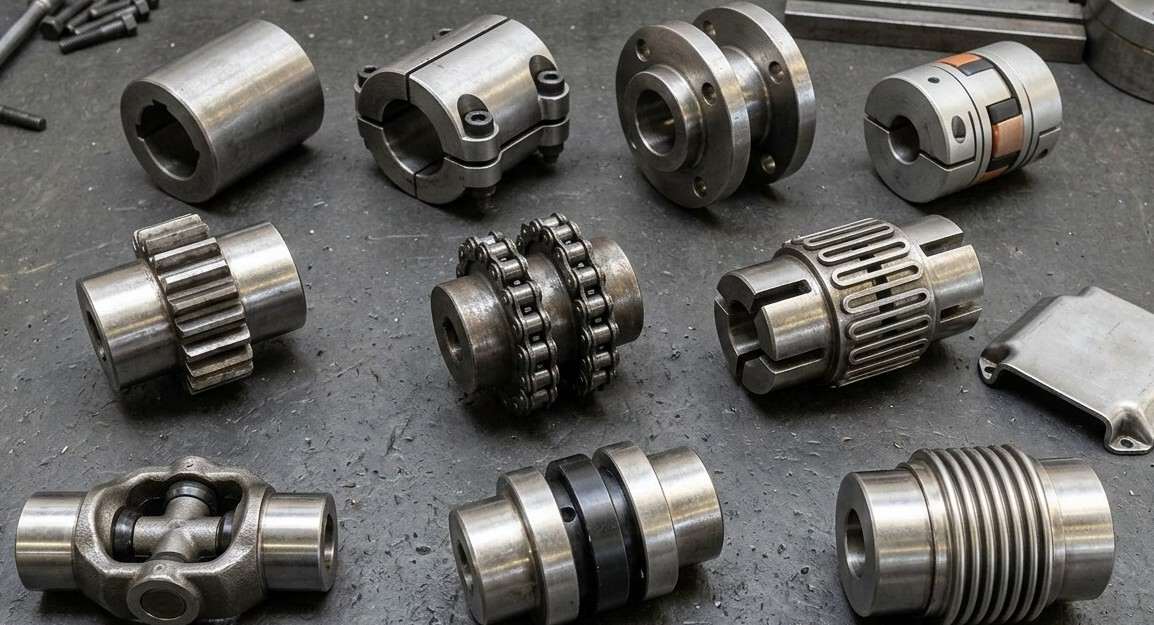
Types of Couplings
There are many coupling types, each built for a specific job. Below are the most common categories used across industries today.
Rigid Couplings
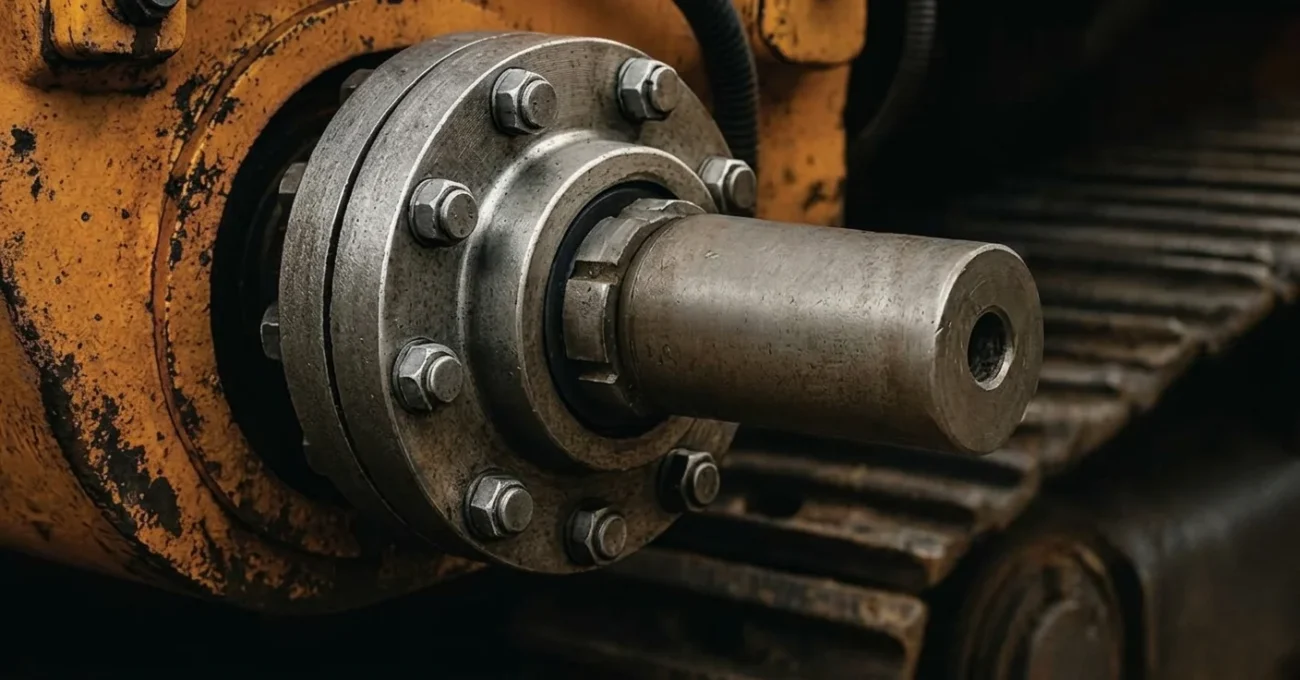
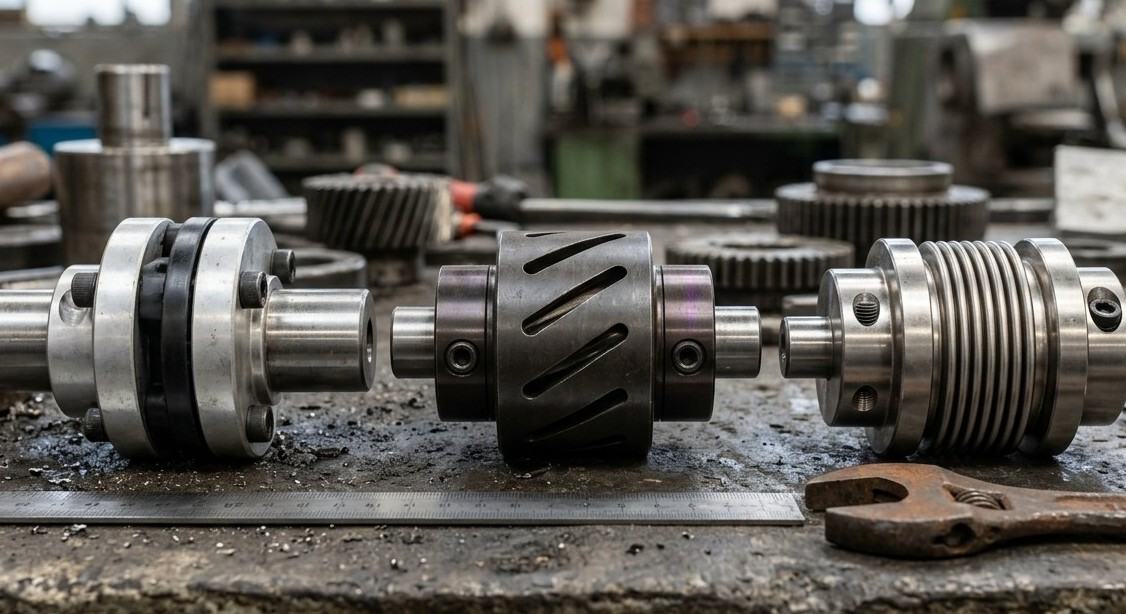
Rigid couplings work best when precise shaft alignment is required and no flexibility is needed. They create a solid, direct connection between two shafts. Common types include sleeve couplings, clamp couplings, and flange couplings.
These couplings are typically used only in low-speed applications. In these setups, alignment can be tightly controlled from the start. Any misalignment in a rigid coupling can cause premature wear.
Flexible Couplings
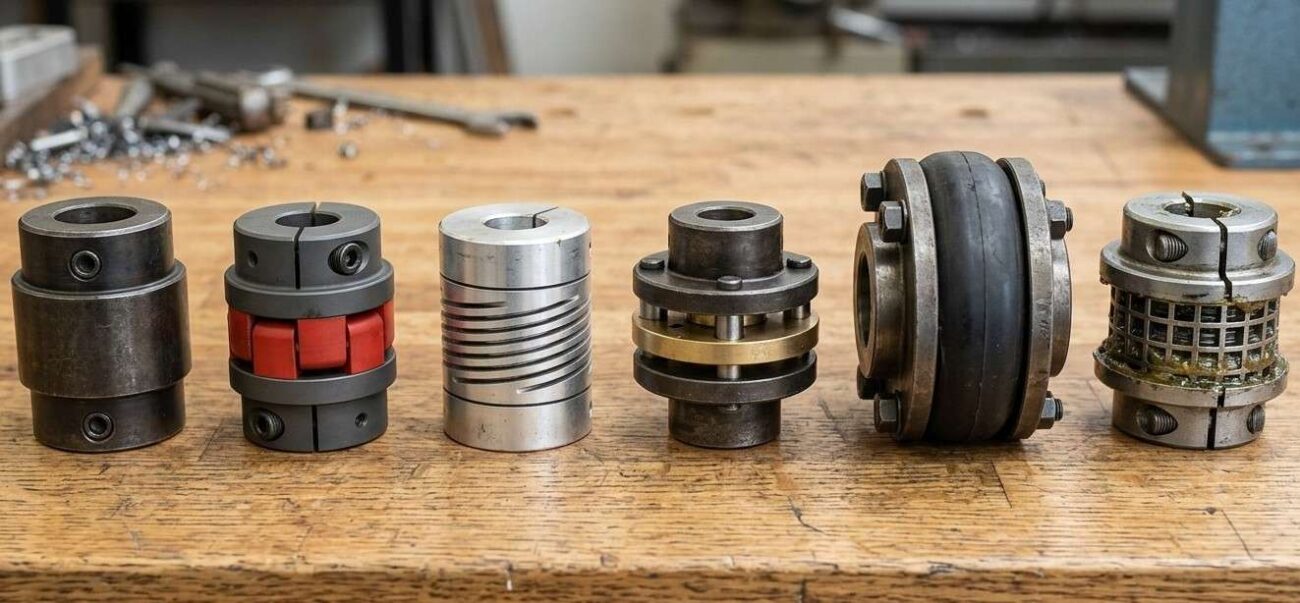
Flexible couplings are the most widely used type in industry. They accommodate slight misalignments, whether angular, parallel, or axial, between connected shafts. This flexibility reduces wear on bearings and other nearby components.
Popular flexible coupling types include:
- Jaw couplings – simple design, good shock absorption
- Gear couplings – built for high-torque applications
- Disc couplings – high-speed performance with minimal backlash
- Elastomeric couplings – use rubber or polymer to dampen vibration
- Grid couplings – handle heavy loads while dampening shock
- Flex couplings – lightweight option for general-purpose alignment needs
Fluid Couplings
Fluid couplings use hydraulic fluid to transmit rotational power between shafts. They’re common in heavy machinery like conveyor systems and industrial fans. Smooth startup and load control matter most in these applications.
Fluid couplings reduce mechanical shock during startup. This makes them ideal for handling high-inertia loads safely and reliably.
Universal Couplings
Universal couplings, or universal joints, connect shafts that aren’t perfectly aligned. They can handle connections even at significant angles between shafts. You’ll find them in automotive drive shafts and industrial equipment needing angular movement.
Magnetic Couplings
Magnetic couplings transmit torque without any physical contact between coupling halves. This design works well for hazardous or corrosive fluid systems. It allows a fully sealed setup, eliminating the risk of leakage entirely.
These couplings are especially popular in chemical processing and pharmaceutical plants. Zero-leakage designs help companies meet strict safety regulations.
Common Uses of Couplings
Couplings show up in nearly every industry that relies on rotating machinery. Below are some of the most common real-world applications.
- Pumps and compressors – smooth torque transmission with minor misalignment tolerance
- Conveyor systems – reduced shock loads during startup and operation
- Generators and motors – reliable power transmission between drive shafts
- Automotive industry – universal joints in drive shaft assemblies
- Marine applications – connecting engines to propeller shafts while absorbing vibration
- Robotics and automation – precision couplings for accurate motion control
Choosing the right coupling depends on torque needs, speed, and misalignment tolerance. Environmental conditions and available space also play a big role in this decision. Getting this choice wrong can shorten equipment life significantly, leading to unexpected repairs.
How to Choose the Right Coupling
Picking the correct coupling isn’t about choosing the cheapest or most popular option. A few key factors should guide your final decision. Here’s what to consider before making a purchase.
- Torque and power requirements – confirm it handles your system’s maximum load
- Shaft misalignment – check if you need angular, parallel, or axial flexibility
- Operating speed – high speeds often need balanced, low-vibration designs
- Environmental conditions – factor in temperature, moisture, and chemical exposure
- Maintenance needs – some couplings need lubrication, others are maintenance-free
Working with an experienced supplier or engineer helps you avoid costly mistakes. They can guide you toward a coupling that maximizes efficiency and minimizes unplanned downtime.
Conclusion
Couplings might seem small, but they’re critical to keeping machinery running smoothly, absorbing shock and compensating for misalignment every single day. Whether you need rigid Couplings for precise alignment or flexible Couplings for everyday use, choosing the right type reduces maintenance costs and extends equipment lifespan.
At Al Omran Rubber Trading, we offer a wide range of coupling solutions for industrial applications, covering rigid, flexible, and specialized types suited to different operating conditions. If you need help selecting the right coupling for your equipment, contact our team for expert guidance.
Related Reading: